Ra
Racowitza, Janko von (-1865)
Rumanian statesman who killed Lassalle in a duel.
Radek, Karl (1885 - 1939)
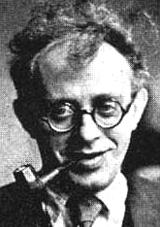 Member of the R.S.D.L.P. since its beginning, where he was active in Galicia, Russian Poland and Germany. Took an anti-war stand during WWI. Became a Bolshevik in 1917. In 1923 a member of the Left Opposition; expelled from the party in 1927 as a result. Radek entered the party again in 1930, but was again expelled in 1936. Tried in the Second Moscow Trial, and died while in prison. Serge had written of Radek: "A sparkling writer... thin, rather small, nervous, full of anecdotes which often had a savage side to them ... just like an old-time pirate." Radek's exact death month in 1939 has not yet been conclusively proven.
Radich, Stefan (1871-1928)
Founder of the Croatian Peasant Party in 1905. After World War I, Radic dominated Croatian politics. He opposed the union of Croatia with Serbia, Montenegro, and Slovenia in favor of an autonomous Croat peasant republic and a federal state structure within Yugoslavia, as well as for land reform and reduced taxes. Despite the electoral success of his party in Croatia, he refused to participate in the national parliament. He visited Moscow in 1923, where he was hailed as a “real leader of the people,” in line with Stalin’s orientation towards the peasantry and the policy of “Democratic Dictatorship of the Proletariat and Peasantry.” After his return to Yugoslavia he was imprisoned and the Croatian Peasant Party disbanded. Soon released from prison, he became Minister of Education. Resigning in 1926, he returned to the opposition. He died of wounds inflicted by an assassin on the floor of parliament.
Ramaswamy, B.M. Kadhir (1914-1995)
Party name: SP
Born in Ceylon. Joined Lanka Sama Samaja Party before the war. Translated, together with Leslie Goonewardene, the Communist Manifesto into Sinhala, 1940. Sent to Madurai along with his older brother, Shanmuganathan, 1940 or 1941. Developed links with important radical Congressmen. Founding member of Bolshevik Leninist Party of India, Madurai, 1942. Went underground during Quit India revolt and worked with T.G. Krishnamurthy and other radical Congressmen. Formed unions in Harvey Cotton Mills and Mahalakshmi Mills, Madurai. Moved to Madras, 1944. Arrested at Purasawalkam in police raids on BLPI and jailed at Alipuram, 1945. Member of the strike committee, Madras Labour Union, 1947. Entered SP with BLPI, 1948. Returned to Ceylon, 1953, taught Sinhalese, and wrote novels. Returned to India and settled in Kottivakkam, 1986. Formed Samadharma Ilakkiya Pannai [Socialist Publishing Society], Madurai. Author: Tiratski vaazhkkai varalaaru: oru thiranaayvu (1989-90). He was working on a book about the Chinese Revolution when he died.
Compiled by Charles Wesley Ervin
Ran, Nazim Hikmet (1902-1963)
Turkish communist poet. Born in Salonica, in 1902. He studied at the Galatasaray Lycée in Istanbul and attended the Naval War School in Heybeliada. While he was a board officer dropped because of ill health. He went to Anatolia to join independence war and worked as a teacher in Bolu. Then over Trabzon and Batum went to Moscow. At the University Kutv he studied political economy and sociology. He joined Communist Party of Turkey. In 1924 he returned to Turkey. Because of his articles and poems in the communist periodical "Aydinlik" he was sentenced to prison for 15 years, but escaped to Moscow. After the Amnesty Law at 1928 he returned again to Turkey. He worked at the periodical "Resimli Ay" In 1932 he was sentenced again to prison for 4 years, but this time pardoned in 1933 in the General Amnesty of 10th Year of Republic. He worked as a journalist and in the film studios. In 1938 his poems and books was found in the War School and he was condemned to prison for 28 years 4 month because of his "agitation in army". He was prison in Cankiri and Bursa. After a international campaign he was released but he lived under the police control. He escaped again to Moscow. At 25 July 1951 he lost his Turkish citizenship but became a Polish citizen. He died at 3 June 1963. His grave is in Moscow.
Ranke, Leopold von (1795-1886)
German writer and historian, criticized by Karl Marx.
Rajk, Lazslo (1909-1949)
Joined Communist Party as a student in Budapest; fought with International Brigade in Spain, where he was wounded, returning secretly to Budapest in 1938, where he worked under cover and played a leading role in the resistance. Arrested by the Nazis, tortured and interned at Belsen. Popular due to his heroic role in the resistance, Rajk was made Minister of the Interior in February 1946, Foreign Minister August 1948. Accused of having been a Nazi agent and of "Tito-ism", he was condemned in an absurd show trial and hanged in September 1949. He was officially 'rehabilitated' by Rakosi in March 1956 when 250,000 people attended his ceremonial reburial.
Rakosi, Matyas (1892-1971)
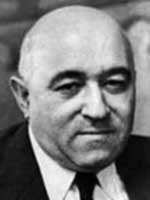 Participated in short-lived Hungarian Soviet government of 1919; escaped to USSR, returning in 1925; jailed 1927, deported to USSR in 1940 in exchange for Hungarians flags held in Moscow since 1849. Leader of Hungarian CP till July 1956; coined the phrase 'salami tactics' as a method of slicing off opponents one at a time; was in USSR at time of uprising.
Rakovsky, Christian Georgierich (1873-1941?)
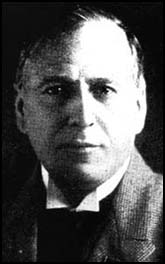 Bulgarian by birth. Member of the Rumanian Social Democracy since the 1890s. Zimmerwaldist. Imprisoned 1916 for anti-war activity. Released by Russian troops in 1917, where he then went to Russia and joined the Soviet government. Held various Government and diplomatic posts, including President of Ukraine where he helped reorganize four competing Communist Parties into one section of the Communist International. As President of Ukraine, he helped develop a seperate foreign policy from that of the USSR, including seperate trading treaties with various east European countries. As friend of Trotsky, he helped found the Russian Left Opposition and was considered by many to be the ideological leader of the Opposition. While Trotsky would organize Oppositionists from within the Communist Party only, Rakovsky took the Bolshevik program of the Left Opposition to the Ukrainian working class as a whole. This flowed from Rakovsky's earlier understanding that the deep bureacratization in the party reached into the debts of Soviet society itself, well beyond the boundries of the Party. He was expelled from the Communist Party of the Soviet Union in 1938. Reinstated later. Sentenced to prison 1938. Believed to have died in 1941.
See Christian Rakovsky Archive
Ransome, Arthur (1884-1967)
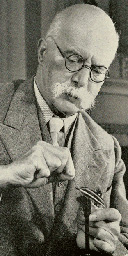 Author of children's literature, in particular the series Swallows and Amazons
According to classified MI5 files released in 2005, Ransome worked for the British Embassy at the start of WWI, from 1915-17, while at the newspaper the Daily News. Ransome became friends with Karl Radek and later married Trotsky's secretary Evgenia Petrovna Shelepina. By 1918, MI5 considered Ransome a loyal British citizen, but was not convinced of the trustworthyness of his information. Meanwhile, MI6 reported that S.76 (Ransome's code name) had no special political views, and that his association with the Bolsheviks began and persisted completely by the request of the British government.
Further Reading: Russia in 1919 and The Crisis in Russia.
Rao, B. Mallik Arjun (c. 1920– 1966)
Born in Guntur District (Andhra Pradesh). Educated Sydenham College, Bombay. Assistant Secretary, Girni Kamgar Union. Journalist, Free Press Journal and Chronicle. Joined Workers Group led by M.G. Purdy, 1941. Founding member, Mazdoor Trotskyist Party, 1942. Returned to Hyderabad; during Quit India revolt led militant strikes in the Nizam State Railway, 1942-43. Jailed, 1944-46. Leader, squatters’ movement in Bombay, 1945. President, MTP, 1947. Participated in the movement against the Nizam of Hyderabad in Sholapur, 1947-48. Secretary and Vice President, Central Railway Mazdoor Union (Secundarabad). Vice President, United Trade Union Congress, 1949. Visited Peoples’ Republic of China, 1952. Provisional Central Committee, MKP, elected January 1955. Ran for Andhra Pradesh Legislative Assembly from Secundarabad City Constituency, 1957 (lost). Co-Secretary, National Railway Mazdoor Union (Central Railway), elected 1958. Elected to Secundarabad Municipal Corporation. Chairman, Joint Action Committee of Central Government employees in Andhra, 1959. Central Committee, RCPI, elected 1960. Author: Indian Peasants Problem .
Compiled by Charles Wesley Ervin
Rao, M. Madhava
Born Nellore (Andhra Pradesh). Educated Stanley Medical College, Madras. Joined Bolshevik Leninist Party of India while still a student. Leader, All-India Student Federation in Madras. Member, MSM Railways Employees Union (Perambur branch), 1946; elected branch candidate for national union Secretary, 1946. Member of the strike committee, Madras Labour Union strike of 1947. Editor, Bolshevik Leninist Party of India Tamil newspaper, Porattam [Struggle], 1948. Delegate to BLPI conference, 1948. Entered SP with BLPI, 1948. Returned to his native Nellore. Joint Secretary, Andhra Provincial SP. Wrote for Socialist Vanguard, 1951-52. Joined SP (Loyalists), 1952. Provisional Central Committee, MKP, elected 1955. Author: Andhra Rashtrabivruddhiki em sheyyali (1953).
Compiled by Charles Wesley Ervin
Rao, S.R. (?– 2008)
Joined Bolshevik Leninist Party of India in Bombay. Entered SP with Bolshevik Leninist Party of India, 1948. Delegate to SP Convention, 1950. Trade Unionist, Central Railway Mazdoor Panchayat (All-India Railwaymen’s Federation). Retired to Hejamadi (Udupi District), Karnataka.
Compiled by Charles Wesley Ervin
Rao, Talipadi Rama (1923-present)
Born in Talipadi (Mangalore Taluk, Dakshina Kannada District), a village in Karnataka. Joined Bolshevik Leninist Party of India in Bombay, 1945. Joined Socialist Party, 1948. Delegate to SP Convention, 1950. Started Modern India Publications and published numerous works by Trotsky and other Marxists in the ‘fifties and ‘sixties. Resides in Mumbai.
Compiled by Charles Wesley Ervin
Roy-Mukherjee, Ajit Kumar
Born Bengal. Went to Britain in 1931 to study law and qualify for the ICS. Joined Labour Party, then League Against Imperialism and CPGB. Co-founded the Marxist Group along with C.L.R. James, 1935. Returned to India, 1937-38. Returned to UK and formed Revolutionary Socialist League with C.L.R. James. Editorial Board, Fight and later Workers’ Fight . Founding leader, Workers International League. Trade unionist, Amalgamated Engineering Union at de Havilland Company’s aircraft factory. Central Committee, Revolutionary Communist Party of Britain, 1944-47. Delegate to FI Congress, Brussels, 1946. Returned to India, 1947. Delegate, Bolshevik Leninist Party of India conferences, 1948. Central Committee, BLPI, 1948. Entered SP with BLPI, 1948. National Executive Committee, SP, 1948-50. Delegate to SP Convention, 1950. Ran for West Bengal Legislative Assembly from Tollyganj Constituency, 1951 (lost). Joined Praja Socialist Party, 1952; member of National Executive of PSP. Joined Socialist Party (Lohia), 1956. Practiced law in Calcutta in the High Court and assisted the Trotskyists as a sympathiser thereafter.
Compiled by Charles Wesley Ervin
Rappoport, Charles (1865-1941)
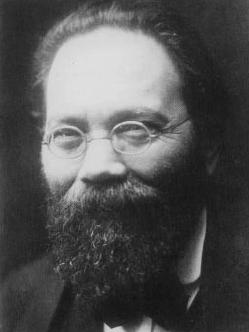 Member of the Russian People's Will party, later the R.S.D.L.P..
Emigrated to France, member Socialist Party and later Communist Party. Journalist and writer and the author of a number of works (The Social Philosophy of Lavrov, Materialism and Idealism in Kant etc.). He wrote a biography of Jaurès. After the Tours Congress of 1920 he entered the French Communist Party and was soon after elected to its Central Committee. In 1922-1923 he supported the Froissard (centre) group but broke from Froissard when the split came. Rappoport remained in the Communist Party until the late 1930s and then broke from Stalinism only to break from revolutionary Marxism.
Further Reading: Charles Rappoport Archive.
Rasputin, G. Y. (1872-1916)
A peasant mystic who acquired a strong influence over the Tsarina of Russia between 1911 and 1916. Much envied, suspected of being a German agent, and successful in obtaining high state office for his nominees, in 1916 he was assassinated by a group of aristocrats led by Prince Yusupov.
Rauer, Otto (1881-1938)
Leader of the powerful Austrian Social Democratic Party after World War I, was a founder of the short-lived Two-and-a-Half International before he returned to the Second International.