Ea
Eagleton, Terry (1943-)
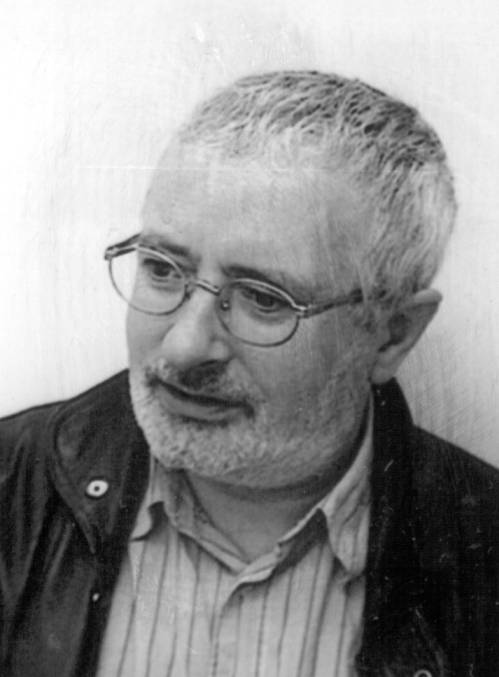 Terry Eagleton is considered to be one of the most influential contemporary British literary theorists and critics. He has published more than fifty books, including Criticism and Ideology: A Study in Marxist Literary Theory (1976), Walter Benjamin: or, Towards a Revolutionary Criticism (1981), The Function of Criticism: From the Spectator to Post-Structuralism (1984), and Ideology: An Introduction (1991).
Eagleton was born on February 22, 1943 to an Irish Catholic family in the City of Salford, UK. “My childhood was very influenced by Irish culture,” he recalls. “My mother’s family [was] strongly Republican. I remember writing a bad Republican song at seven but I hadn’t a cat’s idea in hell what I was writing about!” (“Taking on the Capitalists” 2007). He was educated at De La Salle College, a grammar school for boys in Salford. He studied at Trinity College, Cambridge, where he eventually went on to obtain both his M.A. and his Ph.D. at the age of 21. While completing his graduate work, Eagleton studied under the tutelage of noted Marxist theorist, Raymond Williams. Eagleton went on to become a Fellow in English at Jesus College, Cambridge. Since 1969, he has served as Fellow and Tutor at Wadham College, Oxford. Eagleton was a founding member and contributing writer of Slant, a left-wing journal that ran from 1964 to 1970, which combined Catholic beliefs with Marxist theories. His dialectical engagement of Marxism and Catholicism was published in The New Left Church (1966). As Eagleton commented during an interview more than 40 years later,
“I certainly don’t think it’s odd that Christianity and Marxism should go together in my career, or indeed in anybody’s career. They are both concerned with emancipation, and in the narrative of each the poor play a central role. Something I am very drawn to [in both] is that their assessment of the present state of humanity is very glum, whether that is because of original sin or the class society [...] At the same time there is a feasible capacity for transformation. They see things as being much more stark and realistic than most forms of progressive liberalism. They are both tragic but, in contrast to a merely fashionable postmodern pessimism, both believe in the possibility of change.”
(“Eagleton explains” 2008)
Eagleton’s interest in the political theology of the Catholic left informed much of his early writing.
From 1992 to 2001, Eagleton was Thomas Warton Professor of English Literature at the University of Oxford. He moved on to teach at the University of Manchester, serving as John Edward Taylor Professor of English Literature from 2001 to 2008. Eagleton is a Fellow of both the British Academy and the English Association. He has held visiting appointments at universities such as Cornell, Duke, Iowa, Melbourne, Notre Dame, Trinity College-Dublin, and Yale.
In The Function of Criticism, Eagleton considers the ways in which working-class movements might create the opportunity for socialist intellectuals to become politically active within society. He discusses how the working-class movement within the Weimer Republic “was not only a redoubtable political force; It was also equipped with its own theatres and choral societies, clubs and newspapers, recreation centres and social forums. It was these conditions that helped to make possible a Brecht and a Benjamin, and to shift the role of critic from isolated intellectual to political functionary” (Eagleton 1984, p. 112).
Eagleton reflects on British Marxist literary criticism, and considers the major responsibility of the socialist intellectual to address “an absent, counterpublic sphere, one based upon those very institutions of popular culture and education which failed to emerge in post-war Britain” (1984, p. 112). This objective might be achieved through “the resolute popularization of complex ideas [...] [of] works which make socialist theory intelligible to a mass audience” (Eagleton 1984, p. 113), and which provide the “collective context” necessary for organizing and sustaining socialist institutions “of literary and intellectual production” (Eagleton 1984, p. 113). Eagleton suggests contemporary critics have been devalued because of a lack of social purpose. It is this lack of purpose that has led to the reduction of audience, and to critical responses to the system of values and meanings used to exert political power.
Eagleton’s writings evidence his interest in the dialectical interaction between literature and ideology. As literature reflects and represents dominant ideology, it also maintains the recessed potential for critiquing it. In both Criticism and Ideology and Ideology: An Introduction, Eagleton emphasizes the paradoxical relationship between literature and ideology, as well as the often conflicting and contradictory meanings of ideology, a term that might be regarded as a “text, woven of a whole tissue of different conceptual strands [...] and divergent histories” (1991, p. 1 [Original emphasis]). In Ideology: An Introduction, Eagleton provides a number of definitions for ideology,
(a) the process of production of meanings, signs and values in social life;
(b) a body of ideas characteristic of a particular social group or class;
(c) ideas which help to legitimate a dominant political power;
(d) false ideas which help to legitimate a dominant political power;
(e) systematically distorted communication;
(f) that which offers a position for a subject;
(g) forms of thought motivated by social interest;
(h) identity thinking;
(i) socially necessary illusion;
(j) the conjuncture of discourse and power;
(k) the medium in which conscious social actors make sense of their world;
(l) action-oriented sets of beliefs;
(m) the confusion of linguistic and phenomenal reality;
(n) semiotic closure;
(o) the indispensable medium in which individuals live out their relations to a social structure;
(p) the process whereby social life is converted to a natural reality.
(1976, p. 1-2)
Eagleton expresses a cautious response to “’vulgar’ Marxist” conceptions of literary works as an element in the “’base’ and ‘superstructure’” (1991, p. 100). He draws from other theories of ideology developed by Antonio Gramsci and Georg Luckács, as well as conceptions of the “revolutionary subject” found in the writings of Pierre Macherey, and argues that the literary text is neither a representation of dominant ideology, nor an autonomous element (1991, p. 100). Literature reports dissonances and contradictions within ideology, and in “putting ideology to work, the text necessarily illuminates the absences, and begins to ‘make speak’ the silences of that ideology” (Eagleton 1976, p. 89). For Eagleton, it becomes the critics’ task to analyze and evaluate literature’s relation to dominant ideology and “to the complex historical articulations of these structures which produce the text” (1976, p. 44-45). Criticism must not “situate itself within the same space as the text” (Eagleton 1976, p. 89). It must attempt to “install itself in the very incompleteness of the work in order to theorise it – to explain the ideological necessity of those ‘not-saids’” ([Original emphasis] Eagleton 1976, p. 89).
Eagleton criticizes theorists such as Theodor Adorno and Herbert Marcuse, who he suggests might have overestimated dominant ideology and instead claims, “capitalist society languishes in the grip of an all-pervasive reification, all the way from commodity fetishism and speech habits to political bureaucracy and technological thought” (1976, p. 46). However, as Eagleton concedes, “the diffusion of dominant values and beliefs among oppressed peoples in society has some part to play in the reproduction of the system as a whole” (1976, p. 36). Eagleton considers the literary text as an “open” source of conflicting languages, symbols, and genres that reveal “the limits and absences which mark [ideology’s] relation to history” (1976, p. 95).
In Walter Benjamin: or, Towards a Revolutionary Criticism, Eagleton examines the relation between Benjamin’s theoretical discourse and his own. He describes the relation as “not one of reflection or reproduction” but more “a matter of imbricating the two languages to produce a third that belongs wholly to neither of us” (1981, p. xv). Eagleton experiments with a political approach to literary studies by considering the body, carnivalesque and comedy, feminism, and cultural beliefs and practices. His “critical account” positions Benjamin as a central figure in poststructuralist theory, whose work prefigures “many of the current motifs of post-structuralism” (1981, p. xvi) and “might be used to illuminate some key problems now confronting a ‘revolutionary criticism’” (1981, p. xv). Eagleton prevents Benjamin’s Marxist theories from being “appropriated” and domesticated by the “critical establishment” (1981, p. xvi). He presents Benjamin’s texts as collective backdrop for arguing interpretive strategies, as well as “an intervention into those [same] disputes” (1981, p. xvi).
Perhaps one of Eagleton’s most relevant objectives was to challenge the existence and purpose of academic and cultural institutions that define and value systems of knowledge that inform our lives. In Literary Theory: An Introduction, he surveys a number of critical approaches from New Criticism and phenomenology to poststructuralism and psychoanalysis and concludes that literature and literary theory do not exist as immutable objects and methods of analysis (Eagleton 1983, p. 9). Literature is the “highly-valued writing” of a particular historical period that is subject to the judgment system of the dominant culture (Eagleton 1983, p. 9-10). While literary methodologies have much more in common with other disciplines such as “linguistics, history, sociology, and so on” then with each other (Eagleton 1983, p.172). Eagleton celebrates the lack of methodological unity in literary studies. He attempts to make modern literary theory more accessible and “intelligible” to a wider readership, by familiarizing them with the “implications of theory beyond literature itself” (1983, p. vii). Eagleton proposes a new and diverse form of rhetorical study capable of addressing “the various sign-systems and signifying practices in our own society, all the way from Moby Dick to the Muppet show, from Dryden and Jean-Luc Goddard to the portrayal of women in advertisements and the rhetorical techniques of government reports” (1983, p.207). Eagleton’s idea of diversity in critical methods and objects of analysis limits the potential for “’pure’ literary critical judgment or interpretation” or “high culture,” and allows for the possibility of a more political and historical form of literary analysis (1983, p.18, 22).
Eagleton considers the state of literary and cultural theory in After Theory (2003).
Eagleton reflects on the theoretical contributions of golden age philosophers such as Louis Althusser, Roland Barthes, and Jacques Derrida while questioning how we have “moved beyond them” (2003, p. 2). As he suggests,
The generations which followed after these path-breaking figures did what generations which follow after usually do. They developed the original ideas, added to them, criticized them and applied them. Those who can, think up feminism or structuralism; those who can’t, apply such insights to Moby-Dick or The Cat in the Hat. But the new generation came up with no comparable body of ideas of its own” (2003, p. 2).
He considers the influence of sexuality and popular culture on critical studies. He criticizes graduate students who have come to devalue the study of everyday life as “intricate, unfathomable, obscure, and occasionally tedious,” while often simultaneously writing “uncritical, reverential essays on Friends” (Eagleton 2003, p. 4-5). Rather than trying to change the world, as Eagleton suggests, they have turned away from political action and displaced the impulse of the larger socialist movements of the golden age, and this counterturn has been a “politically catastrophic one” (2003, p. 16).
As Eagleton suggests, doctoral students, once a reservoir of critical innovation, now consider themselves responsible for facilitating an “oppositional” culture that lacks political impulses, and their research reflects a disposition of theoretical amnesia. For Eagleton, they concentrate on “sensationalist subjects like vampirism and eye-gouging, cyborgs and porno movies,” which are of greater interest but less cultural and political value (2003, p. 3). As Eagleton contends, for younger theorists “the politics of masturbation exert far more fascination than the politics of the Middle East” (2003, p. 2). As intellectual matters retreat into the repetitions of everyday life, students endure “the risk of losing their ability to subject it to critique” (Eagleton 2003, p. 3).
Throughout his work, Eagleton has continuously attempted to harness political impulses, refashion rhetorical language, and educate readers about their relation to mass culture. His desire to analyze and evaluate the tradition of criticism and the role of the critic has influenced students and theorists alike. His arguments against postmodernism, a movement he once endorsed in Literary Theory, and in defense of Marxist theory provide a valuable critique of capitalism. His theoretical turns and counterturns demonstrate the progression of a scholar toward a more mature and sophisticated understanding of his role as critic. Eagleton urges his readers to ask questions and, in so doing, uncover contradictions within our selves and the cultural and political structures that shape our interactions. Through his collective writings, Eagleton defends Marxist theory and attempts to provide his readers with a morally conscionable view of the world and their relation to it.
Works Cited
Eagleton, Terry. After Theory. New York: Basic Books, 2003.
Eagleton, Terry. Criticism and Ideology: A Study in Marxist Literary Theory. London: Verson/New Left Books, 1976.
Eagleton, Terry. The Function of Criticism: From the Spectator to Post-Structuralism. London: Verson/New Left Books, 1984.
Eagleton, Terry. Ideology: An Introduction. New York: Verso, 1991.
Eagleton, Terry. The Ideology of the Aesthetic. Oxford: Basil Blackwell, 1990.
Eagleton, Terry. Literary Theory: An Introduction. Oxford: Blackwell, 1983.
Eagleton, Terry. The New Left Church. Baltimore: Helicon, 1966.
Eagleton, Terry. Walter Benjamin or, Towards a Revolutionary Criticism. London: Verso, 1981.
John C. Murray
Eastman, Max (1883-1969)
 Born in New York in 1883 to clergy parents and radicalized in his youth, Max Eastman first became an activist for women's issues and was an early supporter of the Left Opposition.
A prolific writer, Eastman gained a reputation as a fine journalist and in 1912 was asked to take over editorship of the left literary journal The Masses. Other writers to the cooperative magazine included his sister, Crystal Eastman, Floyd Dell, John Reed, Sherwood Anderson, Upton Sinclair, Amy Lowell and Louise Bryant. The journal moved further to the left under Eastman and took a strong stand against US involvement in WWI. As a result, in 1917, they lost mailing privileges and several of its editors were tried twice for violating the Espionage Act. The Masses was suppressed during the trials, but failing to get a conviction by the time the war ended, the government dropped its case. In 1918 Eastman joined with other radical writers to publish The Liberator, a magazine with similar intentions to The Masses, and remained with the publication until 1924, when it ran out of money and was taken over by the Communist Party. In 1922 he left the U.S. for a two year stay in the Soviet Union.
Eastman also authored several books including, Understanding Germany (1916), Journalism Versus Art (1916) The Sense of Humor (1921) Leon Trotsky: Portrait of a Youth (1925), Marx, Lenin and the Science of Revolution (1926), Artists in Uniform (1934) and also translated several of Trotsky's books. Though on the forefront of getting Trotskyist issues to America and a supporter of Trotskyist publications, he was a critic of dialectical and historical materialism and the idea of Marxist philosophy as a science.
In the 40's he became anti-communist and was a supporter of Joe McCarthy. He spent the last decades of his life writing for publications such as the Readers Digest and also wrote two volumes of autobiographical material, The Enjoyment of Living (1948) and Love and Revolution (1965). He died in 1969.
For some of his works, see the Max Eastman Internet Archive.